



Potassium Channel
KcsA
Potassium channels are the most widely distributed type of ion channel and are found in virtually all living organisms. They form potassium-selective pores that span cell membranes. Potassium channels are found in most cell types and control a wide variety of cell functions. Potassium channels function to conduct potassium ions down their electrochemical gradient, doing so both rapidly and selectively. Biologically, these channels act to set or reset the resting potential in many cells. In excitable cells, such asneurons, the delayed counterflow of potassium ions shapes the action potential. By contributing to the regulation of the action potential duration in cardiac muscle, malfunction of potassium channels may cause life-threatening arrhythmias. Potassium channels may also be involved in maintaining vascular tone.
All Product Categories
-
Potassium Channel Inhibitors
(668)
View all products
-
Potassium Channel Agonists
(31)
View all products
-
Potassium Channel Antagonists
(39)
View all products
-
Potassium Channel Activators
(240)
View all products
-
Potassium Channel Modulators
(39)
View all products
-
Potassium Channel Chemical
(1)
View all products
-
Potassium Channel Controls
(11)
View all products
-
Potassium Channel Related Products (1121)
Related Products (1121)

-
Antibodies (6)
-
Related Compound Screening Libraries (1)
-
Amiodarone-d10 hydrochloride
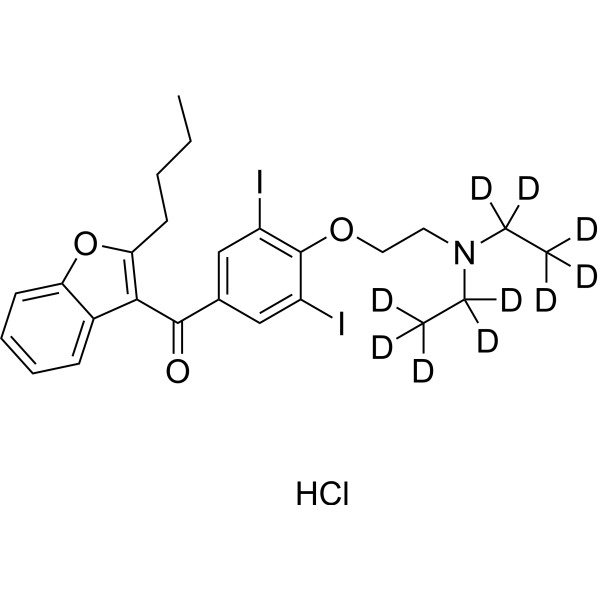 0 ImagesAmiodarone-d10 (hydrochloride) is the deuterium labeled Amiodarone. Amiodarone hydrochloride is an antiarrhythmic agent for inhibition of ATP-sensitive potassium channel with an IC50 of 19.1 μM.
-
Icariside E4
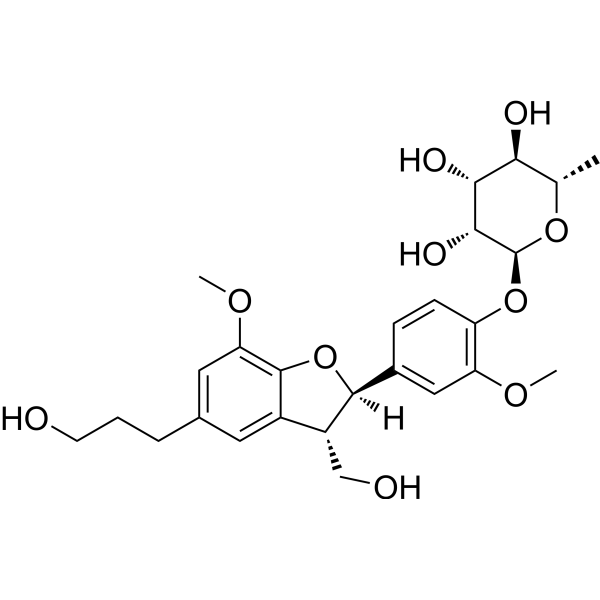 0 ImagesIcariside E4 is an antinociceptive agent, and can be isolated from Tabebuia roseo-alba. Icariside E4 has peripheral analgesic activity by ATP-sensitive K+ channel-dependent mechanisms. Icariside E4 also has anti-oxidant, anti-Alzheimer and anti-inflammatory effects.
-
CBIQ
 0 ImagesSynonyms: 4-Chlorobenzo[f]isoquinolineCBIQ (4-Chlorobenzo[f]isoquinoline) is a benzoisoquinoline compound. CBIQ can activate the cystic fibrosis transmembrane conductance regulator (CFTR) Cl- ion channels and the intermediate-conductance calcium-sensitive K+ channel (KCNN4) with Kd values of 0.1 and 3.9 μM. CBIQ can be used for the research related to cystic fibrosis.
-
AZD-5672
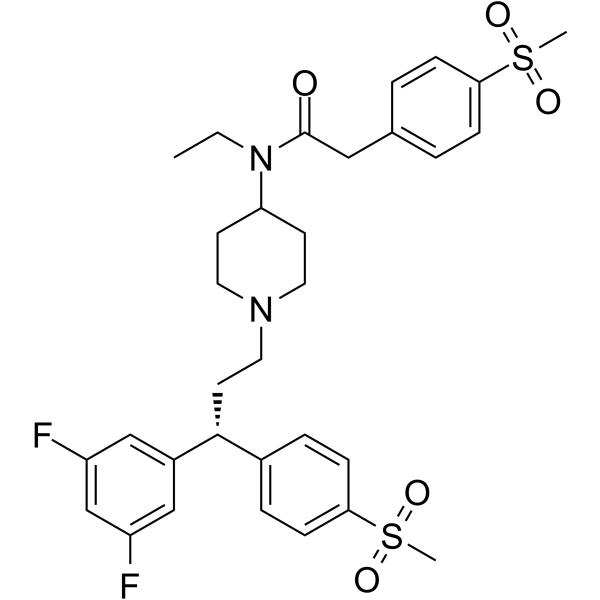 0 ImagesCat. No.: HY-119101CAS No.: 780750-65-4AZD-5672 is an orally active, potent, and selective CCR5 antagonist (IC50=0.32 nM). AZD-5672 shows moderate activity against the hERG ion channel (binding IC50=7.3 μM). AZD5672 is a substrate of human P-gp, and inhibits P-gp-mediated digoxin transport (IC50=32 μM). AZD-5672 can be used for the research of rheumatoid arthritis.
-
Sotalol-d6 hydrochloride
 0 ImagesSynonyms: MJ 1999-d6 hydrochlorideSotalol-d6 (hydrochloride) is a deuterium labeled Sotalol hydrochloride. Sotalol hydrochloride is an orally active, non-selective competitive β-adrenergic receptor blocker. Sotalol hydrochloride is a potent antiarrhythmic agent that can be used for the research of pediatric arrhythmias. Sotalol hydrochloride blocks β-receptors, and potassium KCNH2 channels.
-
Allocryptopine
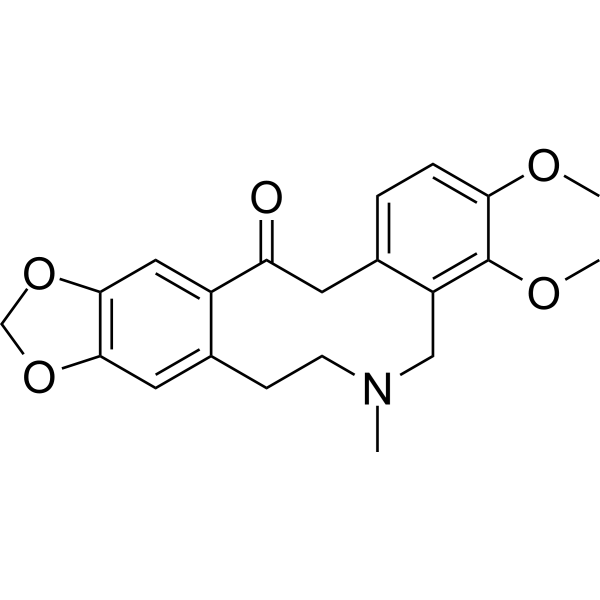 0 ImagesAllocryptopine, a derivative of tetrahydropalmatine, is extracted from Macleaya cordata (Thunb.) Pers. Papaveraceae. Allocryptopine has antiarrhythmic effects and potently blocks human ether-a-go-go related gene (hERG) current.
-
Tamapin TFA
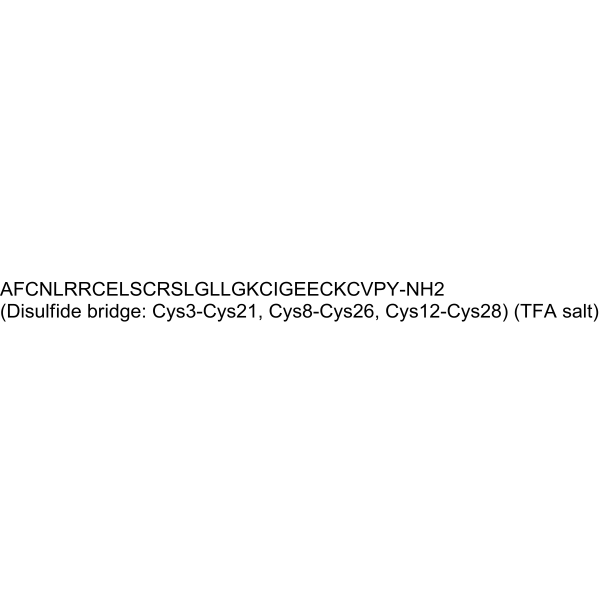 0 ImagesCat. No.: HY-P5154APurity: 98.79%Tamapin TFA is a venom peptide, targeting to small conductance Ca(2+)-activated K(+) (SK) channels. Tamapin TFA is a selctive blocker of SK2 (Potassium Channel). Tamapin TFA inhibits SK channel-mediated currents in pyramidal neurons of the hippocampus. Tamapin TFA can be isolated from the Indian red scorpion (Mesobuthus tamulus).
-
5Me3F4AP
 0 Images5Me3F4AP is a potent blocker of potassium channel, with the IC50 of 220 μM to 693 μM when the pH is increased from 6.4 to 9.1. 5Me3F4AP has the potential to cross the blood-brain barrier and potential application in positron emission tomography (PET).
-
AP14145 hydrochloride
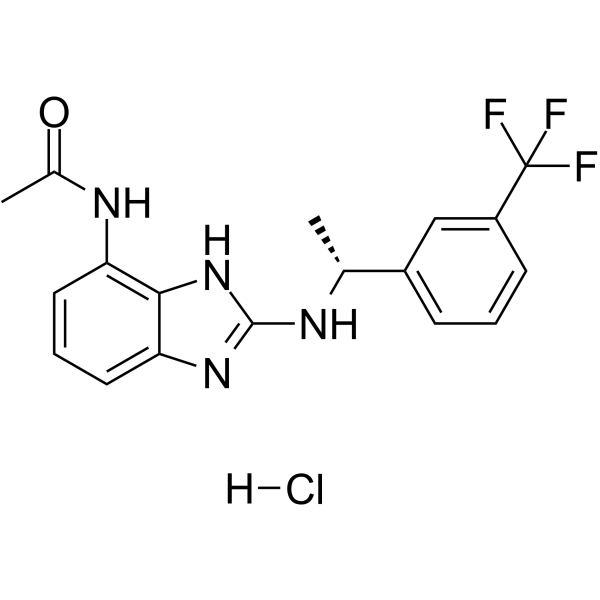 0 ImagesAP14145 hydrochloride is a potent KCa2 (SK) channel negative allosteric modulator with an IC50 of 1.1 μM for KCa2.2 (SK2) and KCa2.3 (SK3) channels. AP14145 hydrochloride inhibition strongly depends on two amino acids, S508 and A533 in the channel. AP14145 hydrochloride prolonged atrial effective refractory period (AERP) in rats and demonstrates antiarrhythmic effects in a Vernakalant-resistant porcine model of atrial fibrillation (AF).
-
KCC2 Modulator-2
 0 ImagesCat. No.: HY-160082CAS No.: 2704531-37-1KCC2 Modulator-2 (example 53) is a KCC2 modulator with an EC50 of 0.215 μM. KCC2 Modulator-2 can be used in the study of neurological disorders.
-
Sulcardine sulfate
 0 ImagesCat. No.: HY-19857CAS No.: 343935-61-5Sulcardine (sulfate) is a novel multi-ion channel blocker with activity against Na+, K+ and Ca2+ channels. Sulcardine has antiarrhythmic activity.
-
4',7-Di-O-methylnaringenin
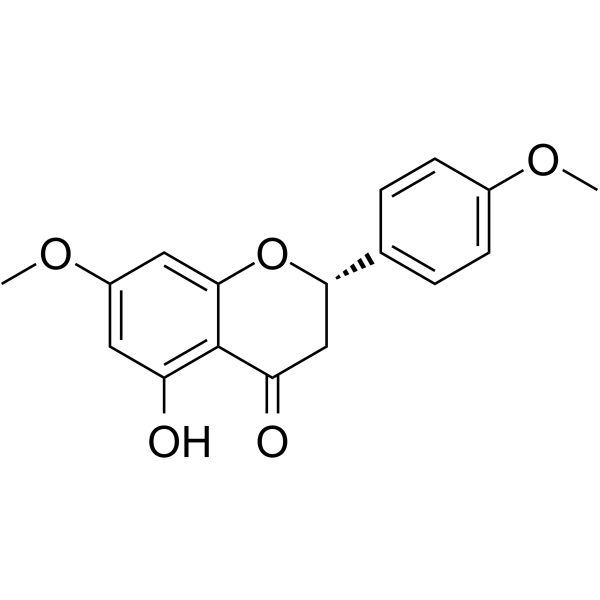 0 ImagesSynonyms: (-)-Naringenin 4',7-dimethyl Ether; (-)-NRG-DM4',7-Di-O-methylnaringenin ((−)-NRG-DM) is a flavonoid found in Renealmia alpinia. (−)-NRG-DM inhibits Nav1.7, Nav1.8 and Kv2.1 channels and has analgesic activity. Intraperitoneal administration of (−)-NRG-DM dose-dependently attenuated pain in a formalin-induced mouse inflammatory pain model and mustard oil-induced mouse colorectal pain model[2].
-
Cloperastine fendizoate
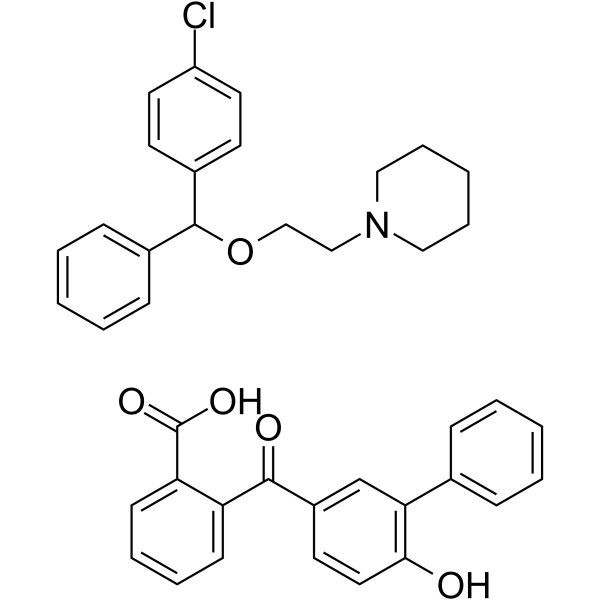 0 ImagesCloperastine fendizoate inhibits the hERG K+ currents in a concentration-dependent manner with an IC50 value of 27 nM.
-
A-935142
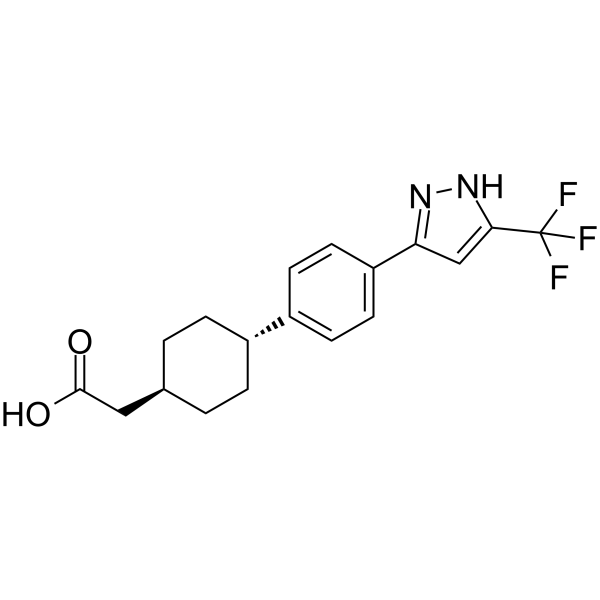 0 ImagesA-935142 is a human ether-a-go-go-related gene (hERG, Kv 11.1) channel activator. A-935142 enhances hERG current in a complex manner by facilitation of activation, reduction of inactivation, and slowing of deactivation, and abbreviates atrial and ventricular repolarization.
-
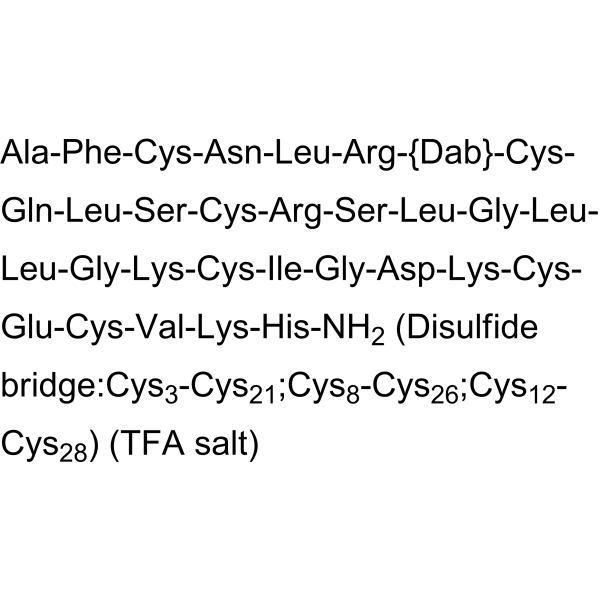
Nav1.8 modulator 1
 0 ImagesCat. No.: HY-172933CAS No.: 3004789-60-7Nav1.8 modulator 1 (compound 1) is a potent Nav1.8 modulator. Nav1.8 modulator 1 has the potential for pain research.
-
Doxapram-d5 hydrochloride
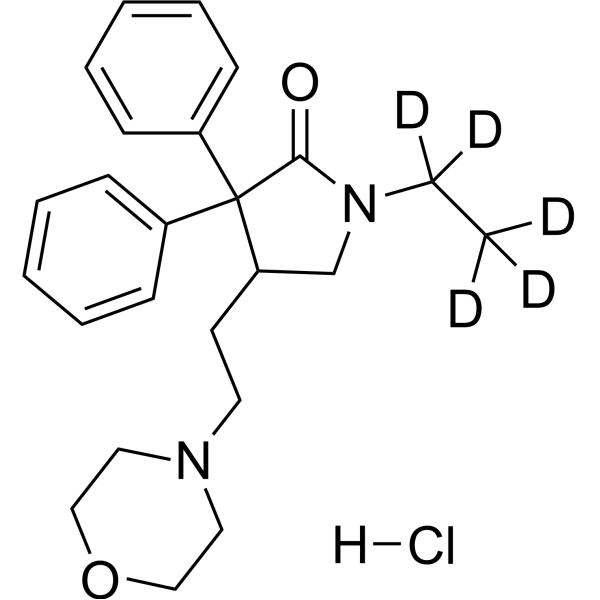 0 ImagesCat. No.: HY-129146SPurity: 99.0%Doxapram-d5 hydrochloride is deuterium labeled Doxapram hydrochloride. Doxapram hydrochloride is a respiratory stimulant. Doxapram hydrochloride increases breathing rate and depth by acting on the brain's respiratory centers and peripheral chemoreceptors. Doxapram hydrochloride inhibits TASK-1, TASK-3, TASK-1/TASK-3 heterodimeric channel function with EC50s of 410 nM, 37 μM, 9 μM, respectively. Doxapram hydrochloride inhibits the Ca²⁺-activated potassium current (IC50 ≈ 13 μM) and Ca²⁺-independent potassium current (IC50 ≈ 20 μM) in type I cells of the carotid body. Doxapram hydrochloride significantly prolongs the effective refractory period of the atrium and has an anti-arrhythmic effect. Doxapram hydrochloride can be used for the study of respiratory depression such as post-anesthesia respiratory depression, chronic obstructive pulmonary disease and apnea of prematurity.
-
Sigma-1 receptor antagonist 3
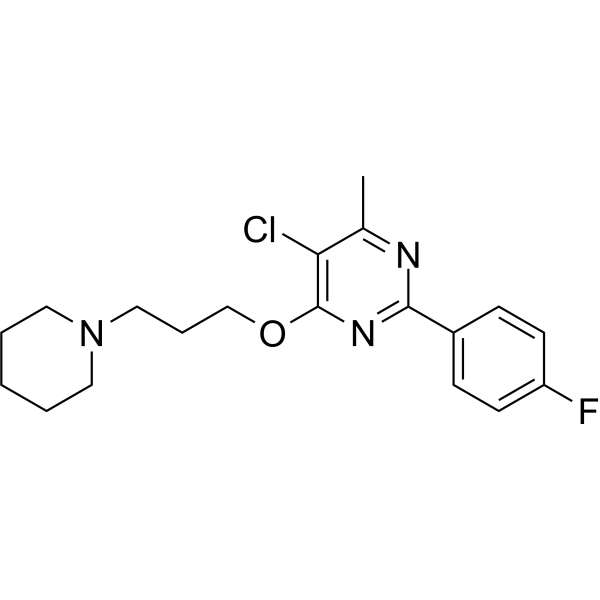 0 ImagesSigma-1 receptor antagonist 3 (compound135) is a potent and selective Sigma-1 (σ1) receptor antagonist with a Ki of 1.14 nM. Sigma-1 receptor antagonist 3 inhibits Human Ether-a-go-go-Related Gene (hERG) with an IC50 of 1.54 μM. Sigma-1 receptor antagonist 3 has the potential for the neuropathic pain.
-
VU0463271 quarterhydrate
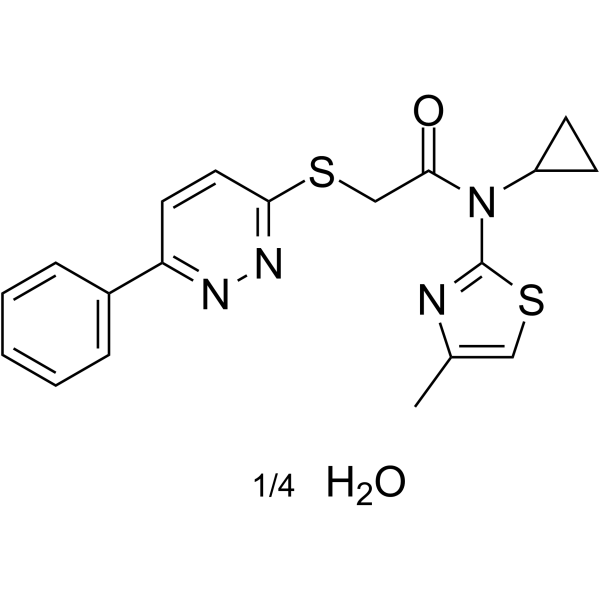 0 ImagesCat. No.: HY-110110AVU0463271 quarterhydrate is a potent KCC2 antagonist, with an IC50 of 61 nM.
-
Desmethylastemizole
 0 ImagesCat. No.: HY-W516880CAS No.: 73736-50-2Synonyms: O-DemethylastemizoleDesmethylastemizole (O-Demethylastemizole) , a metabolite of Astemizole (HY-12532), is a β-hematin (βH) inhibitor. Desmethylastemizole has an antiplasmodium activity against P. falciparum with IC50 of 0.12, 0.11 and 0.06 μM for Pf3D7, PfDd2, and PfItG strains, respectively. Desmethylastemizole is also a Histamine H1 receptor antagonist. Desmethylastemizole significantly blocks hERG K+ channels and also inhibits histone-lysine N-methyltransferase EZH2 activity. Desmethylastemizole can be used for long QT syndrome and malaria research.




